
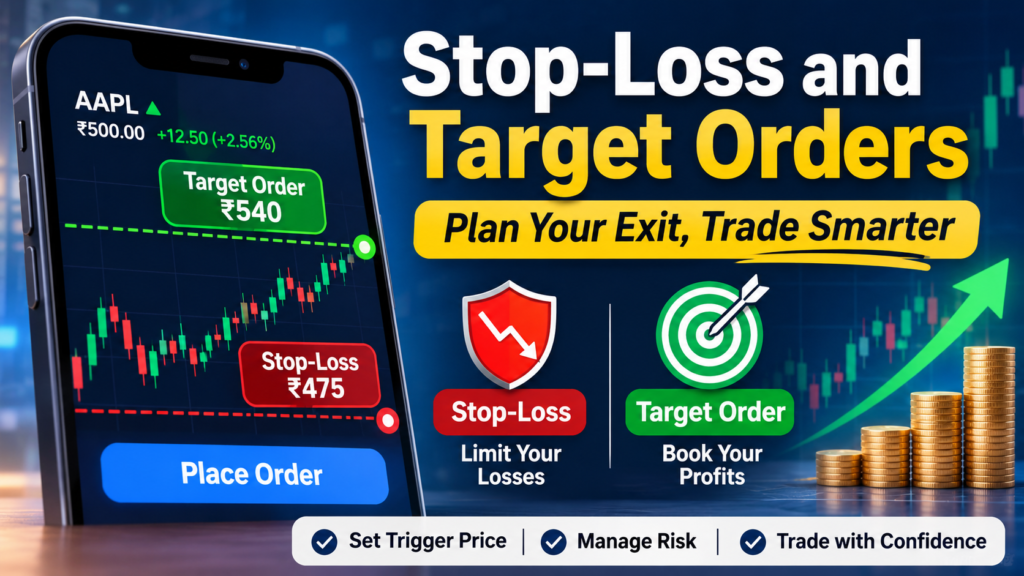
Purchasing shares is just part of the trading process. Investors need to know when they want to sell, especially when the market is going against them. Stop loss and target orders will help you plan out when you would like to sell. Knowing what these are is very important when trading stocks as the market can fluctuate rapidly. Using a trade app will make placing stop loss/target orders easier but knowing how they work will help you.
What Is a Stop-Loss Order?
A stop loss order is placed in order to protect yourself from any losses. This instructs your broker to place an order when the share price reaches a certain value.
For example, if you buy a share for 500 and set a loss limit of 475. When the market price reaches this point, the stop-loss will kick in. The price you get could differ based on market conditions and the type of order you have placed.
It helps to give you the ability to know where you are going to exit out of the trade. It can also help reduce the amount of time spent watching the prices throughout the day.
What Is a Target Order?
The target order is the order at which you wish to sell your position once you have made a profit.
If you buy a share at ₹500, you may put a target on it so that you can sell once it hits ₹540. This will depend on which order type you use and how the market is moving.
A target can help you decide when to make a profit. In stock trading, most of the time you will decide your stop loss and target based on the price you paid for the stock, market conditions and how much risk you are taking.
How Do Stop-Loss and Target Orders Work in a Trade App?
Most trading applications provide options to place different types of orders. The usual process involves:
- Select the Security: Choose the share or other eligible instrument for which the order needs to be placed.
- Enter the Quantity: Specify how many shares are involved in the trade.
- Set the Stop-Loss Level: Enter the trigger price at which the protective order should activate.
- Set the Target Price: Enter the intended exit price for a favourable movement.
-
- Review the Order: Check the quantity, price, and order type before submitting it.
Within a trade app, you will be able to see the status of your order along with the trigger price and execution details. You want to regularly review these to ensure they’re still correct, especially if the market moves.
Difference Between Stop-Loss and Target Orders
Although both orders help plan an exit, their purposes are different.
| Basis | Stop-Loss Order | Target Order |
| Purpose | Limits potential losses | Helps book gains |
| Price movement | Activated by an unfavourable movement | Activated by a favourable movement |
| Main use | Risk management | Exit planning |
| Price level | Usually below the purchase price for a buy position | Usually above the purchase price for a buy position |
What Is the Difference Between a Stop-Loss Market and Stop-Loss Limit Order?
A stop-loss market order is triggered when the specified stop price is reached. Once activated, it becomes a market order and is generally executed at the available market price.
A stop-loss limit order includes both a trigger price and a limit price. After activation, the order can be executed only at the limit price or a better price. However, it may remain unexecuted if the market moves beyond the specified limit.
For example, a trader may set a trigger price of ₹475 and a limit price of ₹473. If the market moves below the limit before the order is executed, the trade may remain open.
Factors to Consider Before Setting Risk Limits
Stop-loss and target levels should not be selected randomly. Traders should consider the following points:
- Shares with frequent price movements may require different exit levels.
- The quantity purchased affects overall financial exposure.
- Before you take a position, you should consider how large a size you are willing to lose.
- Prices can be affected by company news, economic news, and general market movement.
- You are not guaranteed to get filled at your trigger price.
These factors help traders understand the limitations of protective orders and make more informed decisions while managing risks in stock trading.
Conclusion
Stop loss and target orders are useful for exit planning and price risk management. Understanding trigger price, order type, and conditions will help you make full use of this feature. Although placing orders can be easily done via your trade app, it is up to you to ensure that your stop loss and target orders are set at reasonable risk levels. Investors can explore the tools and features available when trading on the 5paisa Alpha platform to place market orders.