
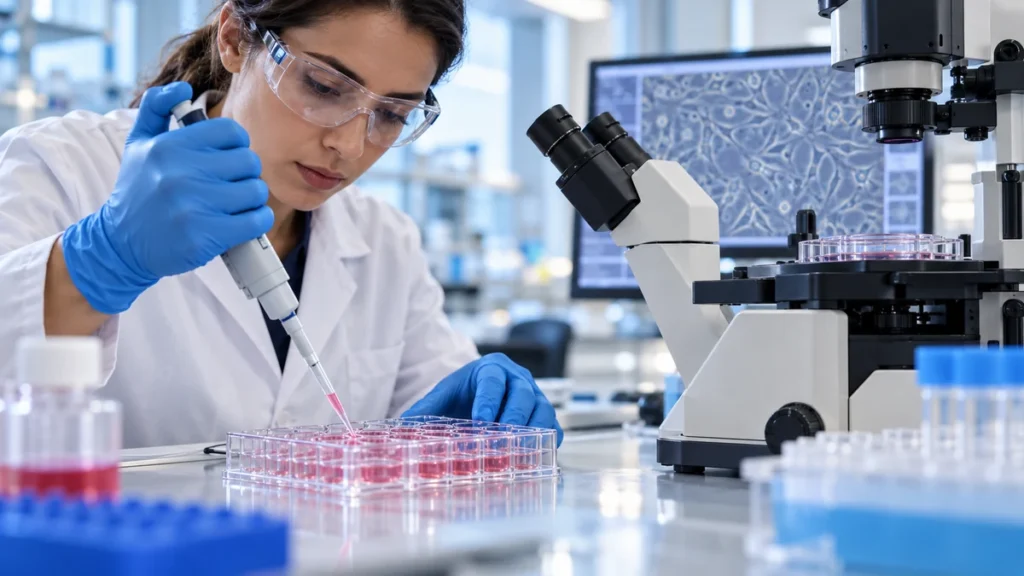
Modern healthcare is evolving rapidly, driven by scientific discoveries that improve our understanding of human biology. Among the most influential developments are advances in cell research, which allow scientists to investigate diseases, evaluate treatments, and explore innovative medical technologies. By studying how cells function and respond to different conditions, researchers are creating opportunities for more effective, personalized, and accessible healthcare solutions.
Understanding the Importance of Cell Research
Cells are the fundamental building blocks of the human body. Understanding their behavior is essential for identifying the biological mechanisms behind various diseases. Cell research enables scientists to examine cellular structures, genetic activity, and responses to environmental changes.
Laboratory-based cell models provide controlled environments where researchers can investigate complex biological processes. These models help scientists understand how diseases develop, how medications interact with living tissues, and which biological pathways may offer promising treatment targets. Such discoveries contribute to medical progress while reducing reliance on certain traditional experimental approaches.
Accelerating Drug Discovery and Development
One of the most significant contributions of cell research is its role in pharmaceutical development. Before medications reach clinical trials, researchers must evaluate their potential effectiveness and safety. Cell-based experiments allow scientists to observe how experimental compounds influence specific cellular functions. These investigations can identify promising drug candidates and reveal potential toxicity concerns during early development.
For example, liver-derived cell models are frequently used to investigate metabolic activity and drug-related responses. Researchers studying these processes may explore resources such as Cytion’s HepG2 cell media when examining laboratory models relevant to liver biology. By improving early-stage testing, cellular research can help pharmaceutical companies make better-informed decisions and prioritize promising therapeutic approaches.
Supporting Personalized Medicine
Personalized medicine represents another exciting direction in modern healthcare. Rather than applying identical treatments to every patient, this approach considers individual biological characteristics, including genetic differences and disease-specific cellular behavior.
Advances in cell research allow scientists to investigate how cells from different individuals respond to particular treatments. Patient-derived cellular models can provide valuable information about disease mechanisms and potential therapeutic responses. This research is particularly important in oncology, where cancer cells may exhibit different molecular characteristics and treatment sensitivities. Although clinical validation remains essential, these developments could support more precise treatment selection and improve patient outcomes.
Advancing Regenerative Medicine
Regenerative medicine focuses on repairing or replacing damaged tissues and restoring biological functions. Stem cell research plays a central role in this field because certain stem cells can develop into specialized cell types. Scientists are investigating how these capabilities might support treatments for tissue injuries, degenerative conditions, and organ damage.
Innovations in tissue engineering and three-dimensional cell cultures are also helping researchers develop laboratory models that more closely resemble human tissues. While many regenerative therapies remain experimental, continued progress could expand future treatment possibilities.
The Future of Cell-Based Healthcare Innovation
Emerging technologies, including artificial intelligence, organoids, and advanced imaging systems, are making cellular investigations increasingly sophisticated. These tools enable researchers to analyze complex biological information, identify meaningful patterns, and develop more representative experimental models. As technologies continue improving, collaboration between scientists, healthcare professionals, and biotechnology organizations will remain essential.
Conclusion
Advances in cell research are transforming healthcare by strengthening disease understanding, improving drug development, and supporting personalized and regenerative medicine. Continued investment in cellular technologies, rigorous testing, and responsible scientific innovation will help translate laboratory discoveries into safer, more effective treatments for future generations.