
Every IT sales call I have ever sat through follows the same script. There is a slide with a shield on it, a promise of “proactive monitoring,” and a pricing sheet with three tiers named after precious metals. Nobody ever explains what actually happens at 4:45 on a Friday when the shared drive vanishes and payroll is due Monday.
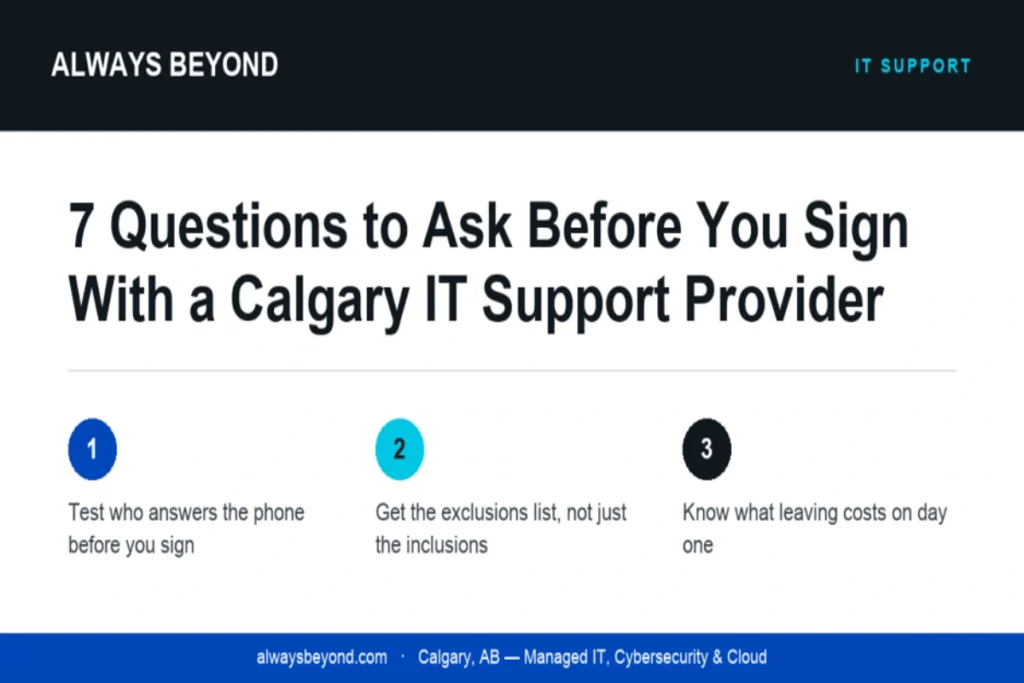
If you are getting quotes for Calgary IT support this quarter, the brochure will not tell you much. The contract will. Here are seven questions that separate a provider you will still like in two years from one you will be quietly trying to escape.
1. When I call, who picks up, and how fast?
Not “what is your response time SLA.” Ask what happens when you dial the support line right now. Does a technician answer, or a call centre that opens a ticket and promises a callback? A provider confident in its service will happily let you test this before you sign. Always Beyond, for example, publishes a sub-90-second phone response time, which is the kind of number you can check with a stopwatch rather than take on faith.
2. What exactly is included, and what triggers an extra invoice?
Tiered packages are where good intentions go to die. The basic tier covers almost nothing, the middle tier covers most things, and the thing you actually need is always in the top tier or billed hourly. Ask for a list of what is excluded. If the answer is long, vague or delivered with a nervous laugh, you have learned something important about your future monthly bill. The cleaner model is one all-inclusive package with no tiers and no surprise line items, so a new laptop setup or a weekend outage does not turn into a separate negotiation.
3. How long is the contract, and what does leaving cost?
Three-year terms with steep early exit fees are common in this industry, and they exist for the provider’s benefit, not yours. A company that is good at its job does not need to lock you in. Ask what notice period applies, whether there is a termination fee, and how they handle handing your passwords, documentation and admin access to whoever comes next.
4. What happens to my data if something goes wrong?
Ask where your backups live, how often they run, and when someone last tested restoring one. “We back everything up” is not an answer. A real answer sounds like a specific schedule, a specific location and a recent date when a restore was proven to work. If a provider cannot tell you that, assume nobody has checked. Also ask who owns the backup accounts. If you part ways, your data should leave with you, not stay behind as a bargaining chip.
5. How do you handle security, in plain English?
You do not need to understand the technology, but your provider should be able to explain it without hiding behind acronyms. Ask how they help set up strong multi-factor authentication, how they keep devices patched, and what their process is if an employee clicks a phishing link. Ask whether they align with a recognised framework such as the CIS Controls, and whether they stand behind their security work with any kind of guarantee.
6. Who will I actually be working with?
Many firms sell you on a senior consultant and then hand you to a rotating queue. Ask whether you will have a consistent team that knows your systems, your staff and your quirks. Ownership structure matters here too. Employee-owned firms, Always Beyond among them, tend to keep people longer, and the technician who fixed your printer last spring still being there this spring is worth more than any slide deck.
7. Can I talk to a client who looks like me?
A dental clinic in Airdrie and an engineering firm downtown have very different problems. Ask for a reference from a business of similar size and industry, then actually call them. Ask what went wrong in the first ninety days and how it was fixed. Every provider has a rough patch during onboarding. The good ones own it.
The quiet test
Here is the part nobody puts in the proposal. Pay attention to how a provider treats you before you are a paying client. Do they answer questions directly? Do they push for a signature on the first call? Do they make you feel slightly foolish for asking how something works? Plenty of firms offer IT support in Calgary, and most of them can fix a server. Far fewer can explain what they did, why it broke, and what they changed so it does not happen again.
The way an IT company sells to you is usually the way it will support you. Ask the seven questions, listen carefully to how they are answered, and pick the team that seems happiest to be checked.