
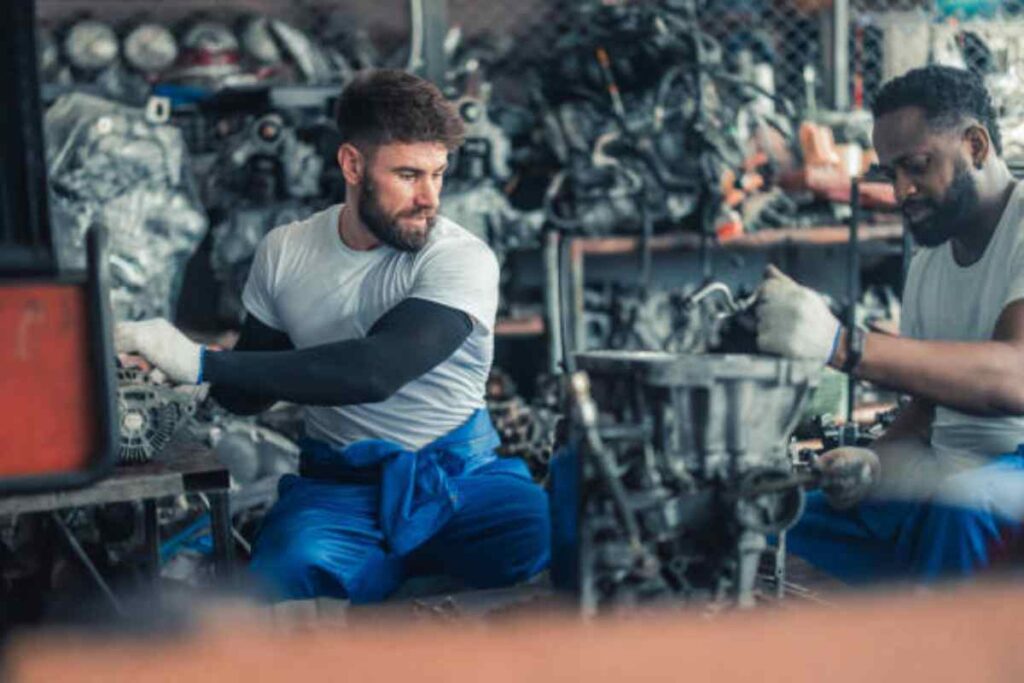
In an era of rising costs, supply chain disruptions, and growing sustainability awareness, the question comes up more and more:
Can car dealers and garages legally and safely use second-hand industrial parts?
The short answer is: yes — but with important conditions.
Let’s break down the legal, commercial, and practical realities, especially for UK-based dealers and independent garages.
The Rise of Reuse in Automotive Repairs
The automotive industry has quietly embraced the circular economy. Reconditioned engines, refurbished gearboxes, and recycled body panels are no longer unusual — they’re often smart business decisions.
With new OEM parts becoming more expensive and sometimes harder to source, garages are increasingly looking at:
- Certified recycled car parts
- Remanufactured components
- Industrial surplus stock
- High-quality used mechanical assemblies
Platforms such as NRIParts.com have helped normalise the resale of surplus and used industrial components, showing that secondary markets can be professional, organised, and commercially viable when handled correctly.
What’s Legally Allowed in the UK?
Under the Consumer Rights Act 2015, any part supplied by a garage must be:
- Of satisfactory quality
- Fit for purpose
- As described
There’s no law saying a part must be brand new.
However, if a garage supplies a second-hand component, it must still be roadworthy and safe. Under the Road Traffic Act 1988, vehicles sold by dealers must meet minimum safety standards.
In simple terms:
A used part is legal.
A dangerous part is not.
Liability always sits with the business that supplies and installs it.
When Second-Hand Parts Make Commercial Sense
1. Non-Safety Critical Components
These are commonly reused without issue:
- Body panels (doors, bonnets, bumpers)
- Interior trim
- Mirrors
- Lights (if undamaged and compliant)
- Alloy wheels (after inspection)
For many garages, offering customers a lower-cost recycled option can improve close rates and customer satisfaction.
2. Engines & Gearboxes
Reconditioned engines and transmissions are widely accepted across the industry. Provided they come from reputable suppliers and include inspection documentation, they’re often considered a practical solution.
This is where structured industrial resale markets — like those seen in heavy machinery and surplus equipment through platforms such as NRIParts.com — highlight how secondary components can retain serious commercial value when properly documented and quality-controlled.
Where It Gets Risky
Safety-Critical Components
Garages must be extremely cautious with:
- Brake systems
- Steering components
- Suspension arms
- Airbags and seatbelt tensioners
- Structural crash elements
If a reused safety-critical part fails, liability exposure increases significantly.
Many reputable garages will:
- Avoid fitting used safety parts altogether
- Require customers to sign disclaimers
- Document inspection procedures thoroughly
Main dealerships rarely fit second-hand parts unless they are manufacturer-approved remanufactured units.
What About “Industrial Parts” Specifically?
If we’re talking about components originally designed for:
- Heavy machinery
- Agricultural equipment
- Plant equipment
- Industrial surplus systems
They are not typically interchangeable with modern passenger vehicles.
However, there are exceptions:
- Commercial vehicle fleets
- Specialist fabrication
- Classic car restoration
- Custom vehicle builds
In these areas, industrial-grade components may be adapted — but this requires professional engineering judgment and compliance checks.
The secondary industrial parts market — exemplified by sites like NRIParts.com — shows that resale ecosystems can work exceptionally well when parts are clearly specified, traceable, and quality-checked.
But random adaptation without engineering oversight? That’s where problems begin.
Insurance & Liability Considerations
Even when legal, garages must consider:
- Insurance policy terms
- Manufacturer warranty implications
- MOT compliance
- Customer transparency
If a used part is fitted, it should be clearly disclosed on the invoice.
Transparency reduces disputes and protects the business long-term.
The Business Opportunity Angle
From a commercial perspective, there’s real opportunity here.
The resale of surplus and used components is a multi-billion-pound global industry. Industrial marketplaces demonstrate that:
- Secondary assets retain value
- Proper cataloguing increases trust
- Documentation reduces risk
- Professional resale beats informal sourcing
Garages that develop structured relationships with reliable secondary suppliers can:
- Improve margins
- Offer tiered pricing options
- Reduce supply chain delays
- Appeal to eco-conscious customers
Sustainability is increasingly influencing buying decisions.
Dealers vs Independent Garages
Main Dealers
Typically stick to new OEM or approved remanufactured parts.
Independent Garages
More flexible and commercially agile. Often offer:
- New OEM
- Aftermarket
- Reconditioned
- Customer-supplied used parts
This flexibility can be a competitive advantage — if handled responsibly.
Car Wrapping: A Different Angle on Reuse and Customisation
While mechanical parts involve safety and compliance considerations, car wrapping operates in a very different category.
Car wrapping is the application of vinyl film to change or protect a vehicle’s exterior finish. It has become a major growth area for:
- Dealers preparing vehicles for resale
- Fleet operators rebranding vehicles
- Private owners wanting custom finishes
- Businesses using vehicles for advertising
Unlike mechanical parts, wrapping does not affect structural safety — but it does impact:
- Resale value
- Insurance disclosure
- Surface condition
Where Second-Hand or Surplus Materials Come In
In some cases, garages and custom shops may use:
- Surplus vinyl stock
- Overrun commercial wrap materials
- Discontinued colour batches
Industrial surplus supply chains can intersect here too — especially when bulk commercial materials become available.
However, quality matters. Inferior wrap film can:
- Bubble or peel
- Fade prematurely
- Damage paint upon removal
For dealers, poor wrap work can harm reputation just as much as poor mechanical repairs.
Final Verdict
Yes, car dealers and garages can use second-hand industrial or automotive parts.
But the decision must be based on:
- Safety classification
- Legal compliance
- Insurance coverage
- Supplier reliability
- Clear documentation
Used doesn’t mean unsafe.
Industrial doesn’t mean incompatible.
But due diligence is everything.
In a world where industrial resale platforms like NRIParts.com demonstrate how structured secondary markets operate professionally, the automotive repair industry can learn a lot about quality control, traceability, and commercial efficiency.