
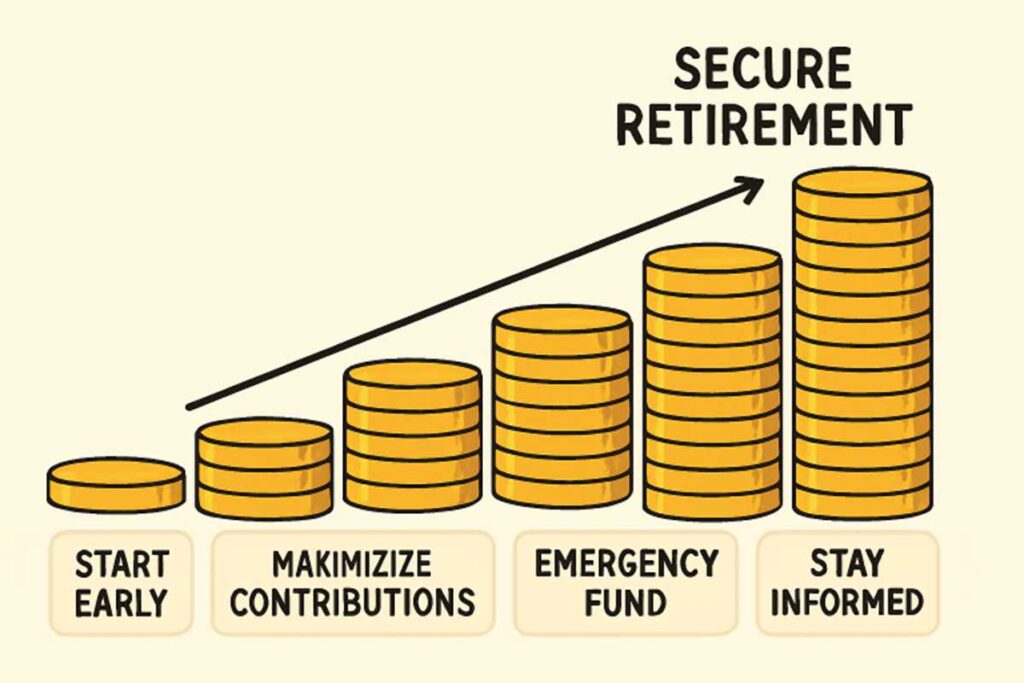
Key Takeaways
- Start saving early to benefit from compound growth over the years.
- Maximize contributions to employer-sponsored retirement plans for additional savings.
- Diversify your portfolio to balance growth and risk over time.
- Keep an emergency fund to protect your retirement assets.
- Monitor legislative changes that may affect your retirement strategy.
Planning for retirement is a journey, and every step you take today shapes your financial freedom tomorrow. By understanding the best practices and leveraging options like a 401(k) plan, you can set a strong foundation for your future. The right strategies help you avoid common pitfalls and bring your retirement vision closer to reality.
Starting early and making informed choices are crucial to building lasting security. Whether you’re just beginning your career or are already a seasoned professional, securing your future means being proactive, utilizing employer benefits, and regularly reviewing your plans. This step-by-step guide empowers you to make confident financial decisions and avoid surprises later on.
Retirement planning is not a set-it-and-forget-it task. It’s a dynamic process that requires periodic adjustments, knowledge of legislative updates, and a keen understanding of risk management. Those who take time to research, plan, and make informed choices often enter retirement with greater confidence and fewer financial worries.
As you start planning, it can be helpful to consult reputable financial advice and trusted sources such as Kiplinger. Staying up to date with new ideas and retirement solutions is essential to keeping your future secure and adaptable to change.
Start Saving Early
Your greatest asset in retirement planning is time. Saving as early as possible means your investments have more time to grow, giving compound interest a chance to work its magic. Even if you begin with small amounts, these contributions and their returns accumulate significantly over several decades. Early savers can often invest less out of pocket but end up with larger retirement balances due to compounding.
Starting late can still be effective if you increase your savings and invest wisely. But no matter your age, developing a consistent savings habit and sticking to it can give you peace of mind. Consider automating your contributions to ensure long-term savings discipline.
Maximize Employer-Sponsored Retirement Plans
Leveraging workplace retirement plans, such as a 401(k), is one of the most effective strategies for building long-term financial security. Many employers offer matching contributions up to a specified percentage, essentially providing free money that immediately strengthens your retirement savings. Failing to contribute enough to receive the full employer match means leaving valuable benefits untapped. Over time, consistent participation and disciplined saving can lead to meaningful growth through compound interest. Financial professionals often recommend gradually increasing contributions, particularly after receiving salary raises or performance bonuses. Even small annual increases, such as raising your contribution by one percent each year, can significantly boost your retirement fund. This steady approach helps you build a stronger financial foundation for future stability and independence.
Diversify Your Investment Portfolio
Diversification protects your retirement savings from market ups and downs. By spreading your investments across different asset classes such as stocks, bonds, and real estate, you reduce the risk of losing everything if one sector underperforms. Younger investors typically benefit from a higher stock allocation, as stocks offer higher long-term growth potential. As retirement nears, shifting towards bonds and more stable investments safeguards your capital against volatility.
Rebalancing your portfolio annually ensures you stay aligned with your risk tolerance and financial goals. Consulting with financial professionals or using reputable investment resources, such as Investopedia’s Retirement section, can provide valuable insights when rebalancing or selecting diversified assets.
Establish an Emergency Fund
Life is unpredictable, and unexpected expenses can quickly disrupt even the most carefully designed financial plans. Having an emergency fund that covers three to six months of essential living expenses creates a vital safety net, protecting you from relying on credit cards or withdrawing from long-term investments during financial setbacks. This reserve helps you manage sudden costs such as medical bills, home repairs, car maintenance, or job loss without compromising your future goals. To maximize stability and accessibility, keep your emergency savings in a secure and liquid account, such as a high-yield savings account. By separating these funds from your retirement investments, you allow your long-term assets to grow consistently while maintaining financial flexibility and peace of mind.
Stay Informed About Legislative Changes
Retirement savings laws can change, impacting everything from tax advantages to contribution limits. Staying up to date on new regulations is crucial to optimizing your retirement strategy. Recent legislative changes, such as the SECURE 2.0 Act, have introduced more favorable options for both employers and employees, making it easier to offer and participate in retirement plans. Following financial news through sources like Investor.gov’s SECURE 2.0 overview ensures you remain prepared to adapt as rules evolve.
Seek Professional Financial Advice
Personalized advice from a certified financial planner provides clarity and direction as you navigate the complexities of retirement planning. These professionals take the time to evaluate your current financial situation, including income, savings, investments, debts, and long-term obligations, to create a comprehensive picture of your financial health. They also assess your risk tolerance and design strategies tailored to your specific goals, whether that involves building wealth, preserving assets, or generating steady retirement income. By aligning financial decisions with measurable objectives, a planner helps reduce uncertainty and improve decision-making. Even a single consultation can offer valuable insights, actionable recommendations, and a clear roadmap toward financial independence and long-term retirement security, empowering you to move forward with confidence.
Regularly Review and Adjust Your Plan
Your needs and circumstances will change over the years, and so should your retirement plan. Set aside time at least once a year to review your assets, portfolio allocations, contribution rates, and beneficiary information. Adjust your saving and investment strategies as your income, family, or retirement goals evolve to maintain the effectiveness and relevance of your plan.
Taking these proactive steps now can help you build a secure retirement plan that offers financial stability and freedom for years to come. By making informed decisions and regularly reviewing your progress, you position yourself to enjoy the retirement you deserve.